
Four out of five Massachusetts businesses have no employees. Most of them need an address, not an office.
SBA data shows 81% of Massachusetts small businesses have no employees. Here's what a one-person business needs: an address, mail handling, and a room to meet.
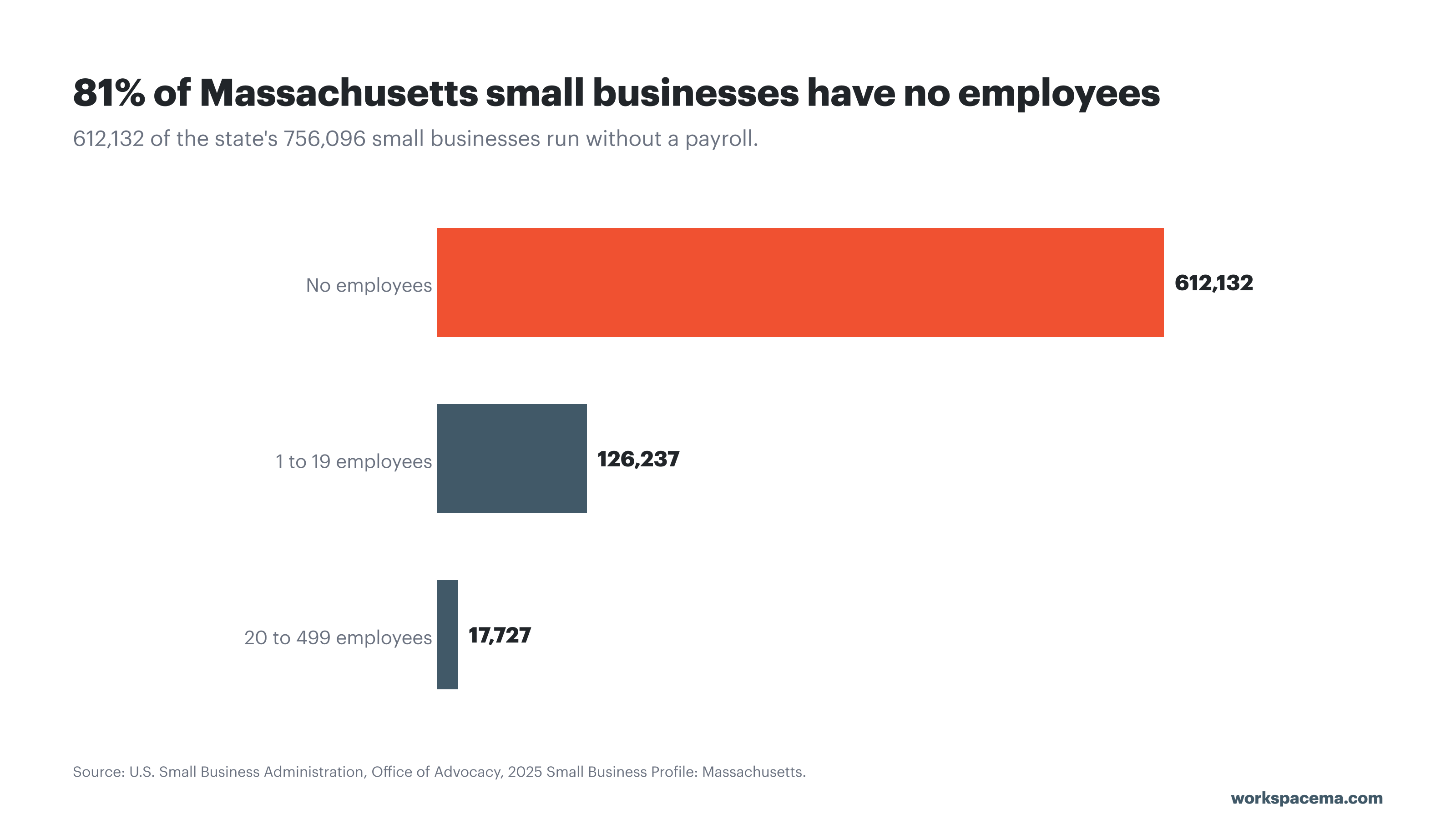
The U.S. Small Business Administration counts 756,096 small businesses in Massachusetts. 612,132 of them have no employees. That's 81%.
The Boston metro looks the same. Of its 552,091 small businesses, 447,015 run without a payroll, also 81%. That metro takes in the North Shore and South Shore towns where our five buildings sit.
When most people picture a small business, they picture a storefront with a few people behind the counter. The more typical Massachusetts business is one person, an LLC, and a laptop. I know the type. Before Workspace, I worked out of coffee shops and from the kitchen table too.
Who these businesses are
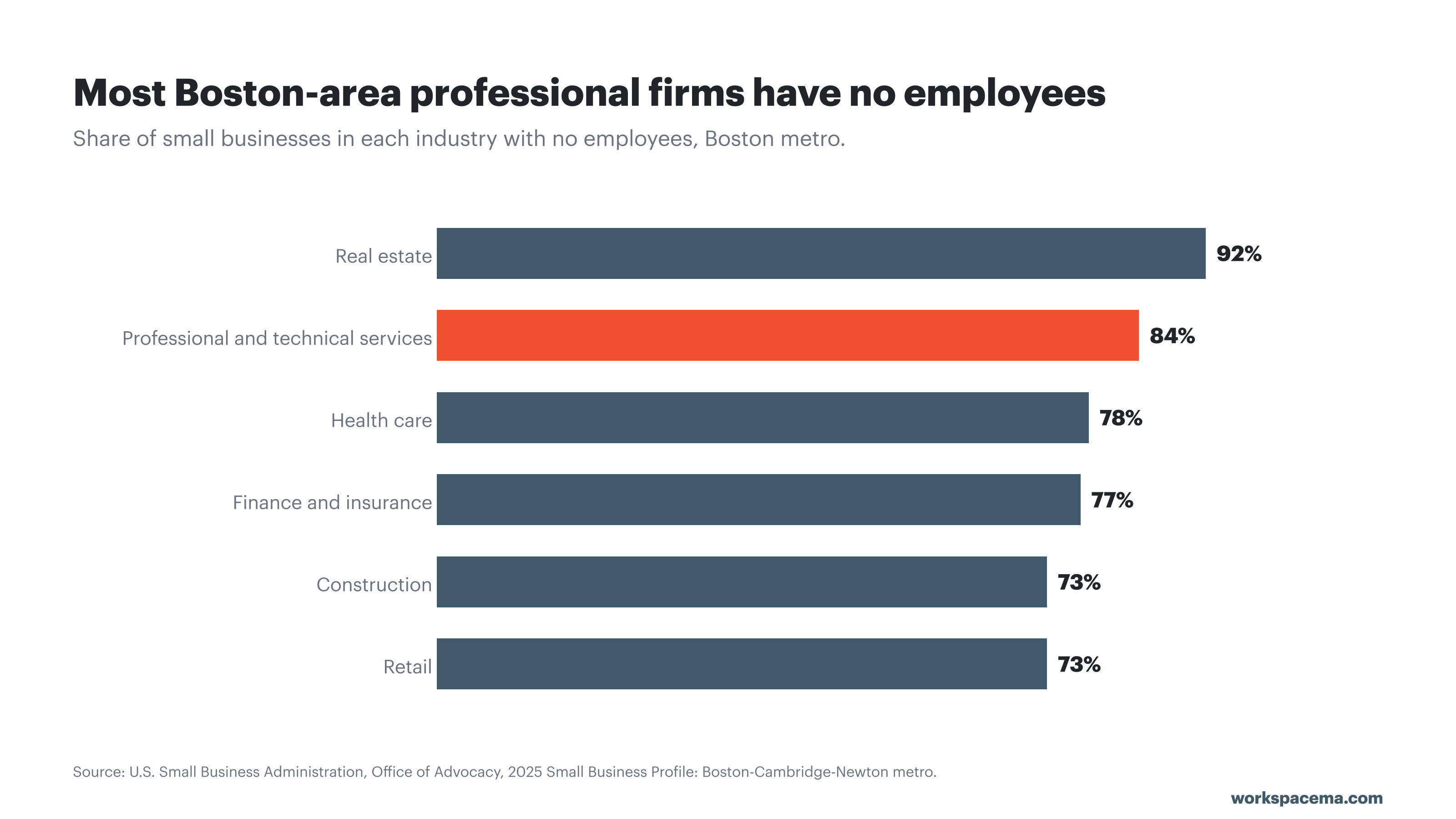
The SBA breaks the Boston metro down by industry, and the biggest category isn't retail or restaurants. It's professional, scientific, and technical services: consultants, accountants, engineers, designers, lawyers. There are 100,883 of those small firms in the metro area, and 84,727 of them, 84%, have no employees.
It's the same story in the fields we see most at our front desks. 92% of small real estate businesses have no employees. In health care, it's 78%. In finance and insurance, 77%.
These aren't hobbies. In 2023, 12.7% of private workers in the Boston metro were self-employed, up from 12.3% in 2018. The median income for the incorporated self-employed was $95,250, up 19.2% over the same stretch. These are real businesses that happen to have a staff of one.
If you're starting one, our guide on how to register a business in Massachusetts covers the filings.
What a business with no employees actually needs
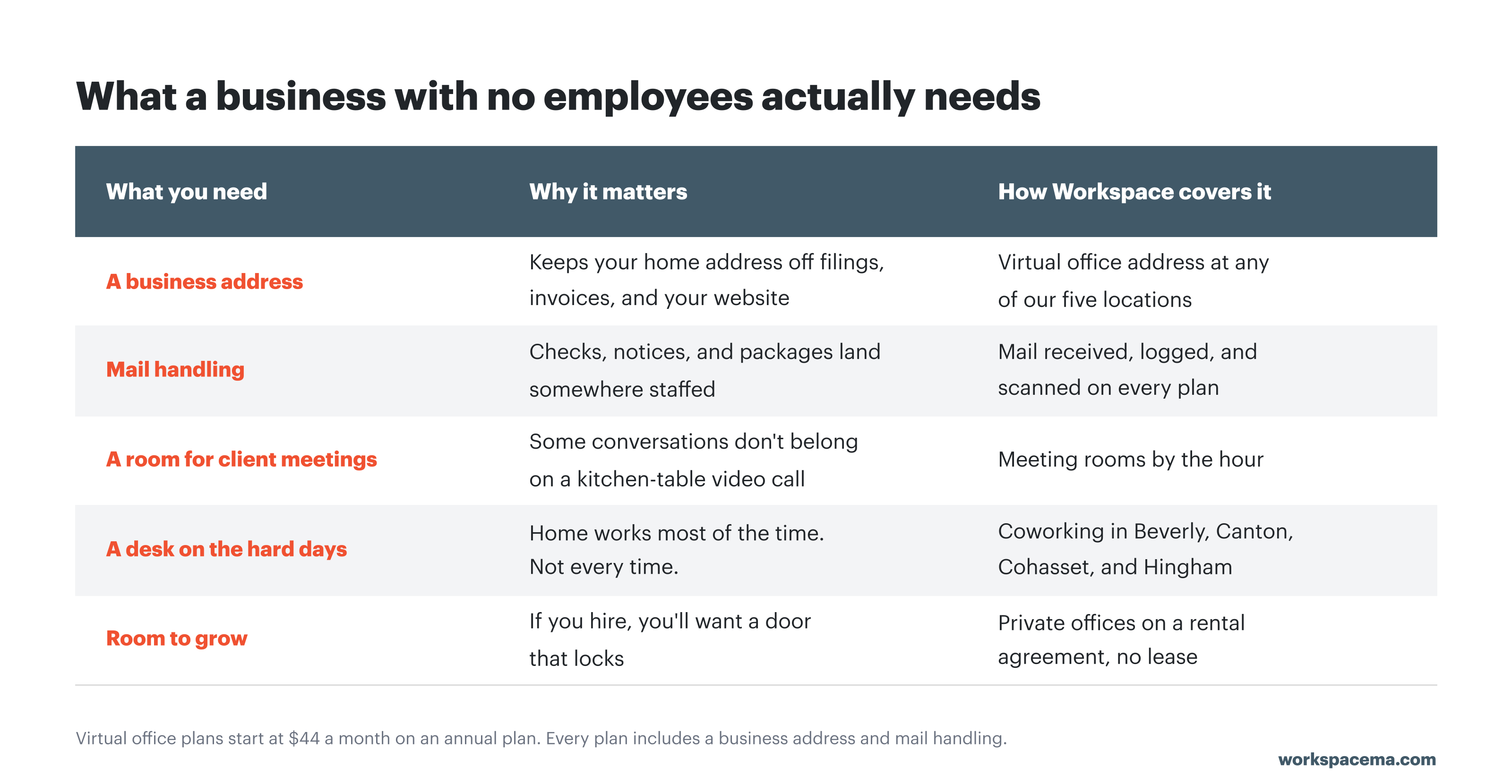
Almost none of them need a full-time office. What they need is smaller and more specific:
- A business address that isn't their home. It goes on state filings, invoices, a website, and a bank account. Our post on what address an LLC needs explains why that matters here.
- Someone to receive the mail. Checks, tax notices, and packages should land somewhere staffed, not on a porch.
- A room for client meetings a few times a month. Some conversations don't belong on a video call from the kitchen.
- A desk for the days when home doesn't work. Most days it's fine. Some days it isn't.
- A way to grow. If you hire your first person, you'll want a door that locks, without signing a five-year lease.
Why the address matters more than the desk
The address on your Massachusetts filings is public. So is the one on your website and invoices. For a one-person business, that's usually the owner's home. A virtual office separates the two. Your mail comes to a staffed front desk, gets logged and scanned, and your home address stays yours.
There's one piece of paperwork involved. The U.S. Postal Service requires Form 1583 from anyone who receives mail through a service like ours, and it has to be notarized. We walk every member through it.
What we offer
Our virtual office plans cover all five locations: Workspace Beverly, Workspace Braintree, Workspace Canton, Workspace Cohasset, and Workspace Hingham. Every plan includes a business address and mail handling, and starts at just $44/month on an annual plan. Here's what a virtual office at Workspace costs in more detail.
When you need a room, meeting rooms are bookable by the hour at every location. When home stops working, coworking is available in Beverly, Canton, Cohasset, and Hingham. When you're ready for your own space, our private offices run on a rental agreement, not a lease, with 30 days' notice to move out.
Want to see it in person? Book a tour Monday through Friday, or ask Lillian, the assistant on our site, any time.