
November 3, 2026 · By Justin Moran, Founder, Workspace
The age of the solopreneur has reached Massachusetts. Here's what a new business needs.
Massachusetts business filings rose 38% from 2019 to 2025, led by founders working on their own. What Stripe and Census data show, and what a new business needs to get set up.
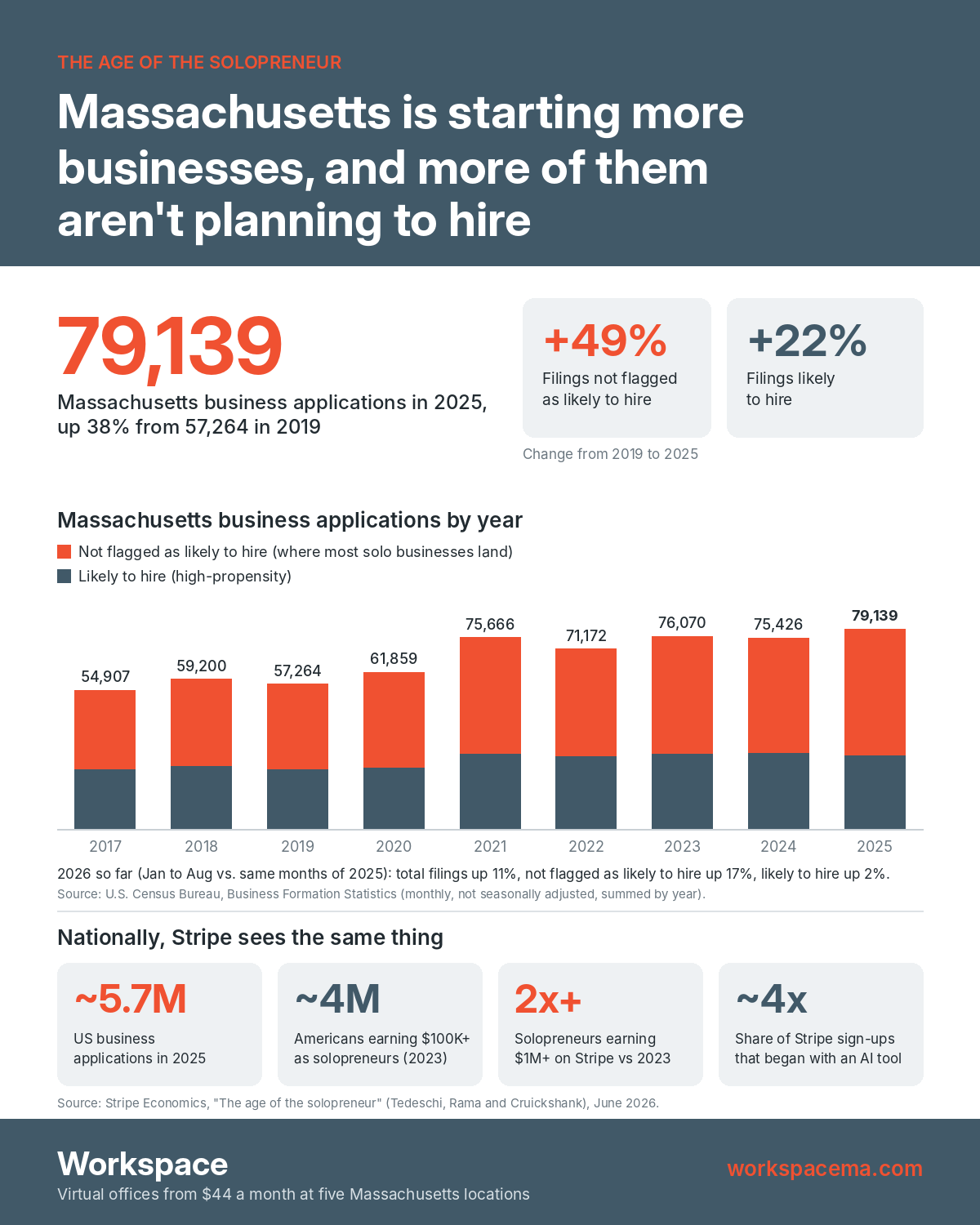
More people are starting businesses in Massachusetts than at any point in the last nine years, and more of them are starting alone. The state logged 79,139 business applications in 2025, up 38% from 2019, and the fastest growing share came from founders with no sign of plans to hire. Stripe's economists call it the age of the solopreneur. Here is what the numbers say, and what a one-person business needs to get set up here.
What Stripe found
In June, Stripe economists Ernie Tedeschi, Marisa Rama and Chris Cruickshank published The age of the solopreneur. Their case is that people are starting businesses on their own faster than ever, those businesses are getting bigger, and AI is a big reason why. What they found:
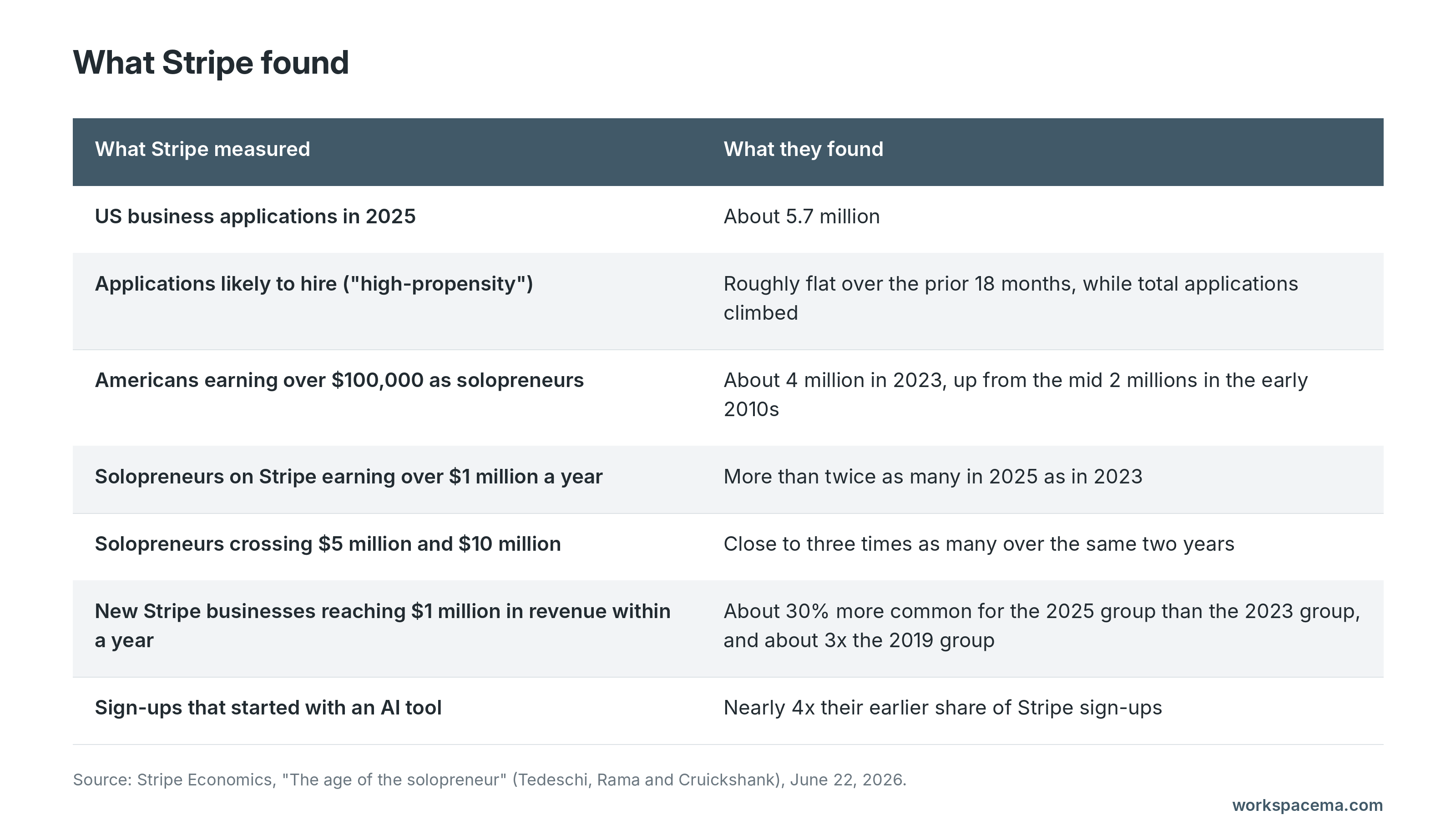
They also checked whether this was a pandemic hangover. It isn't. The Paycheck Protection Program stopped taking new applications in May 2021, and nothing like it is propping up filings now. Stripe is clear that its index is a stand-in: it likely undercounts solo businesses, and some of them have hired since. The direction is not in doubt.
The same thing is happening in Massachusetts
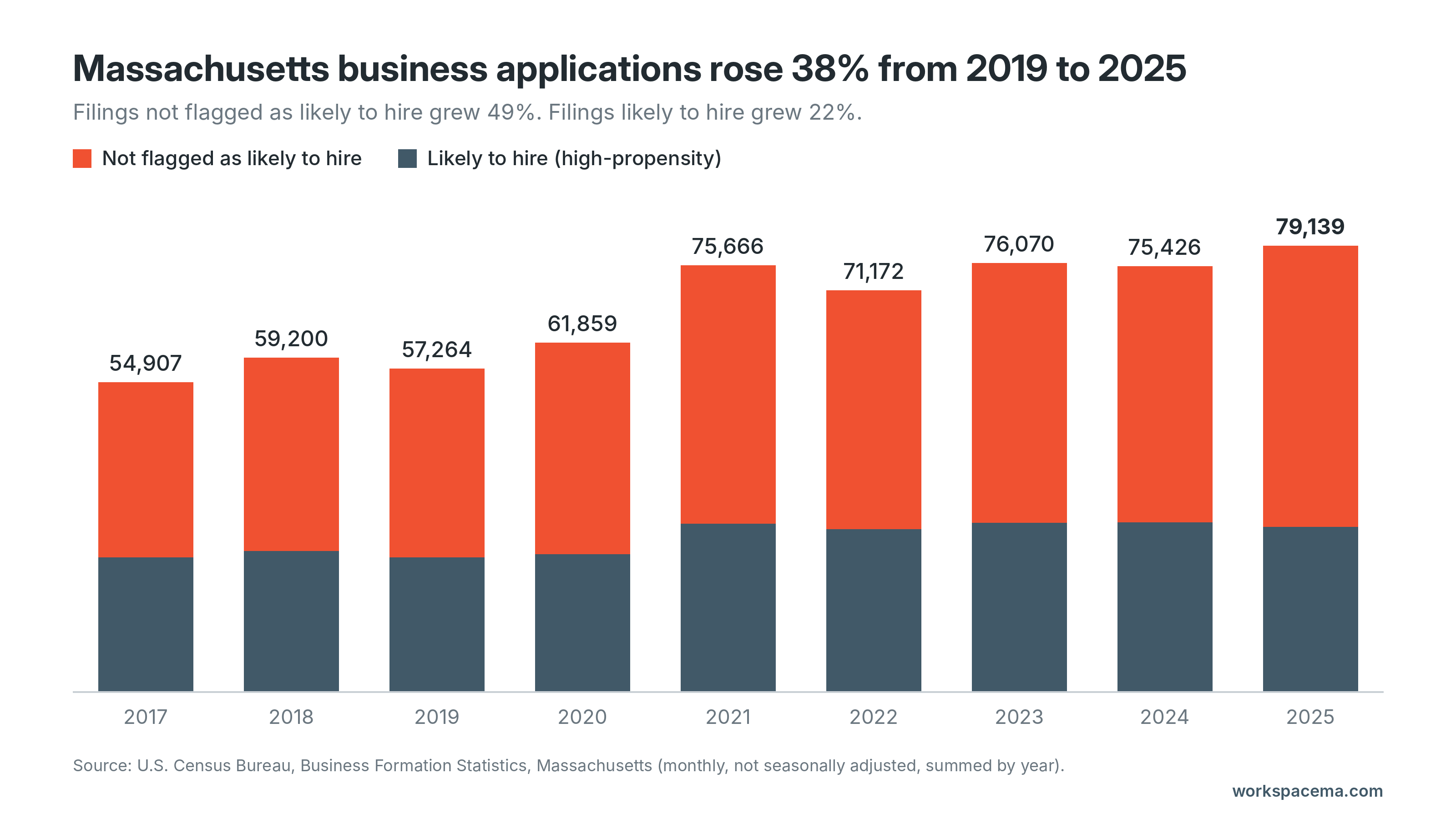
We pulled the Census Bureau's Business Formation Statistics for Massachusetts to see whether the national story holds here. It does. The Census flags an application as "high-propensity" when it shows signs of becoming an employer, such as planned wages. From 2019 to 2025, those grew 22%. Everything else grew 49%, and made up 63% of all Massachusetts filings in 2025, the highest share of any year since 2017.
It hasn't cooled off this year. From January through August 2026, Massachusetts filings were up 11% over the same months of 2025. Applications likely to hire rose 2%. The rest rose 17%.
That matches what we're seeing at our front desks. Demand for our virtual office plans has spiked this year, and this is why.
Why one person can do more now
Stripe's last finding explains the why. AI is filling the gaps that used to make a first hire necessary. Sign-ups to Stripe that began with an AI tool grew to nearly four times their earlier share, and since early 2025, the number of businesses without employees has grown faster in industries that use more AI.
The result is a founder who can run sales, books, marketing and delivery from a laptop. What that founder still can't do from a laptop is give the Commonwealth a street address, sign for certified mail, or meet a client somewhere better than a kitchen table.
What a new Massachusetts business needs on day one
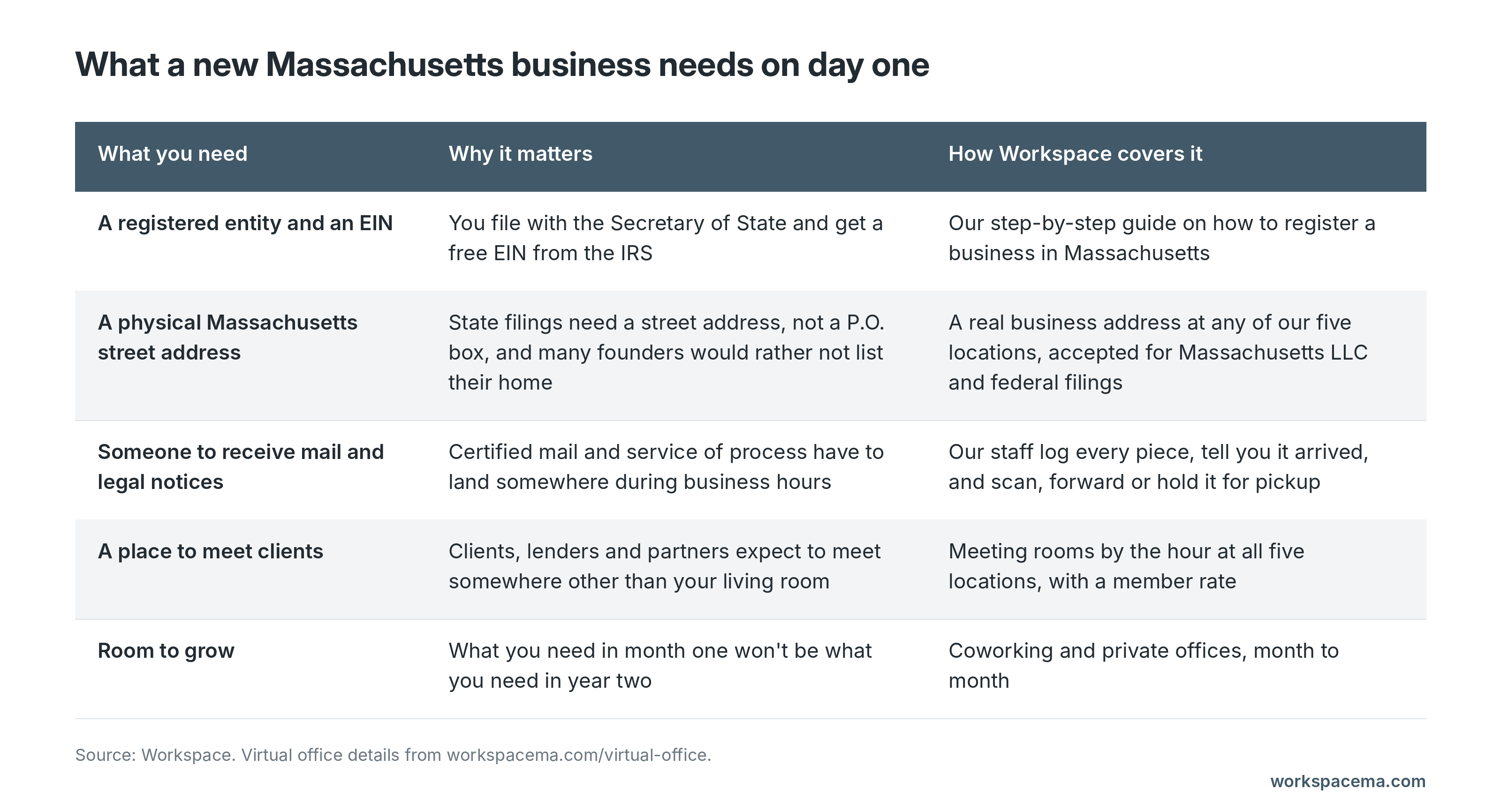
Start with our guide on how to register a business in Massachusetts, and see what address an LLC needs. When you need space, we have meeting rooms by the hour, coworking and private offices, all month to month.
Why Workspace fits new founders
We're a founder-run company ourselves. We grew Workspace in the suburbs without outside investment, so we know what it's like to watch every dollar in the first year. Our virtual office plans start at $44 a month, with no twelve-month commitment. You can move up or down a plan with 30 days' notice.
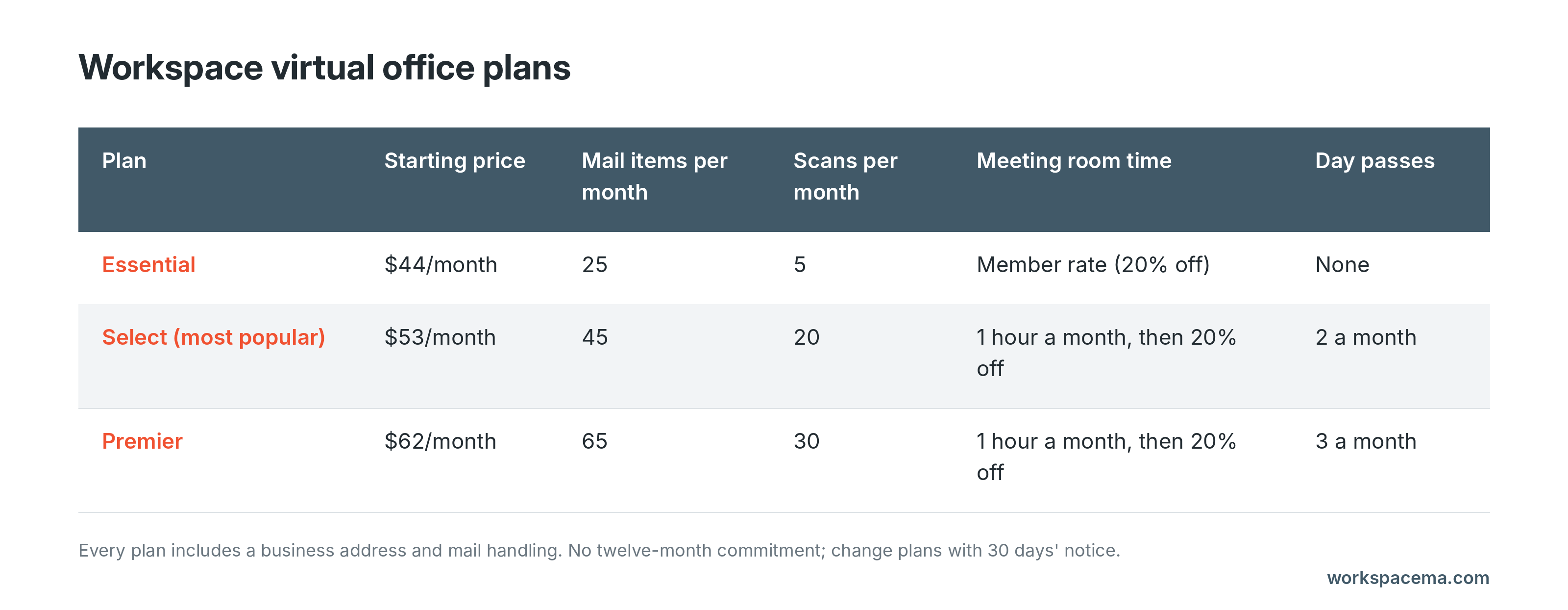
Every plan includes both a business address and mail handling. The address is a real street address at a staffed office, not a mail drop. For a full price comparison across Massachusetts, see what a virtual office costs here.
You can pick any of our five locations as your address:
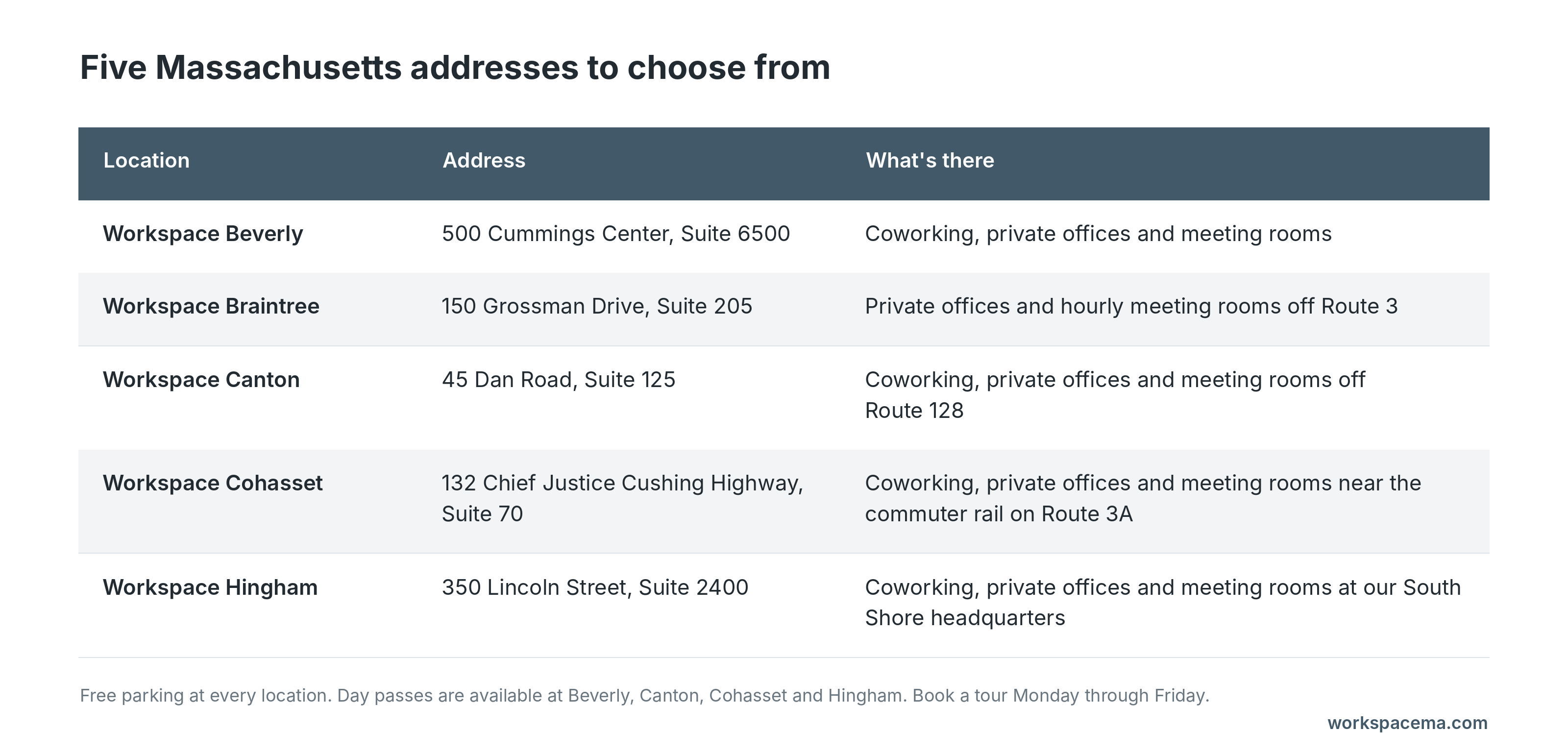
Visit Workspace Beverly, Workspace Braintree, Workspace Canton, Workspace Cohasset or Workspace Hingham.
Day passes work at our four coworking locations: Beverly, Canton, Cohasset and Hingham. When the business needs a desk, a door that locks or a room for a team, you move up without changing your address.
Want to see a space first? Book a tour Monday through Friday at any location, or ask Lillian, the chat on our site, to recommend the one closest to you.
Sources
- Ernie Tedeschi, Marisa Rama and Chris Cruickshank, The age of the solopreneur, Stripe Economics, June 22, 2026
- U.S. Census Bureau, Business Formation Statistics, via FRED: Business Applications: Total for All NAICS in Massachusetts
- U.S. Census Bureau, Business Formation Statistics, via FRED: High-Propensity Business Applications: Total for All NAICS in Massachusetts
About Justin Moran, Founder, Workspace
Justin is the founder of Workspace, which has provided private offices, coworking, and virtual offices to Massachusetts businesses for more than ten years.
Connect on LinkedIn